Cheese crime, corduroy and a plague in Kent

Sometimes you get the feeling that it’s life itself that makes life enjoyable.  A look at what’s been happening in the world over the past week bears this out – and relax, this is no place for thoughts on the Eurozone fiasco, although there’s plenty of scope there.  Next month maybe.

What?  Losing you already?  Blimey – back to proper subjects like cheese and corduroy.

Let’s start with cheese.  Theft is increasing at UK retail outlets.  It’s gone up by 6.2% over the past year, and we’re leading the Continent on this (about time we showed our supremacy over Johnny Foreigner).  And what looms largest in our championship-class shoplifters’ sights?

Cheese.

Yes.  Cheese.  It comes in as the highest-percentage category of stolen goods.  People steal more cheese than anything else.

Hang on, though. Remember the riots?  Call to mind those leisurewear-clad honchos carrying wide-screen TVs and boxes of trainers. Did you see anyone swaggering off with a pound of Gorgonzola?  I didn’t notice it, but maybe they stuffed the item down their baggy jeans.  Might impress the gels, come to think of it.
Yet I suspect this August’s events will skew the figures for next year’s stolen merchandise report – but don’t be misled by a burst of midsummer madness.  Some things are eternal, man, and cheese is for ever.

But what do the miscreants do with their booty?  It’s hard to imagine whispered conversations in the pub followed by a furtive swap of pongy dairy produce and crisp fivers.  And there’s a lot of image consciousness in this sort of thing. We’ve seen heroin-chic on the catwalks but Stilton-chic seems a long way off.

Talking of clothes, cheese is certainly a risky accessory.  I knew a chap who once carried a legitimately-purchased quarter of Roquefort home in his mac pocket.   He threw the mac away.

But forget the doubts.  Let’s celebrate our leadership in something, even if it’s only shoplifting.  And cheers for cheese.

Now, corduroy.

November 11th is a significant date for the most noble of reasons.  But this year it has an added import.  The Corduroy Appreciation Club is holding a special get-together in Brooklyn as part of a world-wide celebration by lovers of the ribbed cotton material.

Why 11.11.11?  Because if you take out the full stops, call it 111111 and look at it with your eyes screwed up a bit, the date looks a little like a piece of corduroy.  So corduroy appreciators from far and wide will be gathering to mark the occasion.

What will they do at the event? Apparently they’ll be addressed by a leading light in the corduroy appreciation world who will deliver his corduroy thoughts to the heaving throng.  They’ll also link up with the corduroy community throughout the world, who will be observing the day in celebratory mood.  Presumably spaghetti is on the menu.  I’d love to be there but I’ve a pressing engagement with a wedge of gruyere at Sainsbury’s.

Finally, the plague.

The Marlowe Theatre in Canterbury finally opened last week, and Prince William did the ritual honours.  It seems he cracked a few jokes so the local newspaper christened him the  Clown Prince.  That’s not bad, in the light of the absolute rule in local press to force a pun into the headline (‘Brown Owl a hoot at Guides’ Christmas Show’ etc).

But the headline writer forgot that although a spell check will tell you you’ve spelt a word correctly, it might be one letter out from the word you were aiming for.  So how’s this for the world’s worst-ever come-on to potential audiences: ‘Clown prince unveils plague at city’s new theatre’.

All that makes life worth living.  But it also reminded me of the creative process in putting an advertising campaign together.

There are times when you follow the strategy religiously and come up with an entirely logical response to the planning brief.  The outcome?  Correct but predictable.

There are other, much more satisfying, occasions when you start at the other end, come up with something outrageous, then work back to see if it fits, no matter how unexpectedly.   You say: “Let’s start with a penguin,” or “How about a slice of toast?”.  Then you track back and find this could be a remarkably engaging and effective way of promoting a cycle retailer or a software company.  You have to work hard to do it, but the result is always better than the conventional route.

So cheese and corduroy and plagues – you’ve grabbed my attention with unlikely conjunctions.   I just wouldn’t choose the plague route myself.

If I’m being taken for a ride, please make it first-class

I was looking for a good hotel in Scotland so I did what anyone does first.  I trawled through some review sites to see what The People think.   They’re the best judges after all, aren’t they?  Ordinary customers with no axe to grind, no vested interests, no professional agenda – they simply want to help you and me because they’re, well, completely philanthropic about it.

Now, if I ran a hotel I know what I’d do.  Of course – post my own reviews.  Eureka!

I’d craft each piece carefully, moderate my enthusiasm to keep things credible, and change the style each time.  I’d remember to include a few misspellings and clichés plus a bit of eccentric punctuation, all for authenticity’s sake.  But in every case I’d leave the reader in no doubt that mine was the establishment that fitted the bill in every way.

Then I’d extend the strategy to tackle the competition.  Nothing too damning – a passing reference to slow service, a glance in the direction of slightly sloppy housekeeping, an aside about the receptionist’s attitude – just enough to get the reader thinking: “Well, maybe not.  I’ll move on to the next one on the list …” – the next one, of course, being mine.

OK, so I’m no philanthropist.  In this flight of fancy I might even be a bit of a crook.  But at least I’d be conscientious about it.   I’d give my would-be victims the comforting impression that I respected them enough to make a bit of an effort.

But, of course, nobody’s actually trying this.  Are they?

Well, back to my own hotel search.  Here’s are some helpful online comments from, h’mm, the general public:

Hotel A.

“Outstanding Service”                                                                                                                I would recommend this hotel to anyone looking to spend some time in Scotland!! Everyone is made welcome and the staff are pleasant, friendly and eager to make your stay special.  Peter10, Crawley, United Kingdom

“Friendly, welcoming & fabulous views”                                                                           I would recommend this hotel to anyone looking to spend some time in Scotland!! Everyone is made welcome and the staff are pleasant, friendly and eager to make your stay special.  Strawberry 456, Wolverhampton, England

A strong whiff of the template there, I’d say.  But how about the restaurant, Ms Strawberry456?

The food is out of this world, the five course menu offered interesting options … and I can honestly say that it’s the best food I’ve ever eaten and the deserts were to die for.

The best food she’s ever eaten.  And she’s doing that dying business over the desserts. Mmm, that’s some restaurant.  Somebody’d better get in quick to counter that.  Now, what does Mike21 from Bolton say …

Three courses in twenty minutes with hardly a breath between each, then the dirty plates were left in front of us for half an hour … The sweets menu was then presented, but … too long passed without us being asked for our order so we decided not to bother

Clever stuff, Mike21.  You don’t exactly comment on the food but we get your drift.  His technique is subtle compared to most in this genre.  He almost sounds as if he’s prasing the joint, then slips in the killer observation.  For instance, Ms Strawberry456 works hard on the decor and the pricing policy here – entirely independently, you understand:

We chose a room with a view, offering a jacuzzi bath and I can say this was well worth the extra money, especially after a long walk!! The room was nicely decorated, with a really comfy bed.

How do you handle that, Mike21?  Here goes:

We were greeted by a lovely lady who … showed us to our room, which we felt was a little dated (also a dud bulb that had not been replaced) ….   we had a couple of drinks in the very comfy lounge (but this also had at least half a dozen dud bulbs that had not been replaced)   

Ah, those little asides.  I think Mike21’s winning.  Ms Strawberry456 continues the struggle:

I would like to thank the staff for making our visit special and I can promise we will be back!

But Mike21’s faint-praise technique wins the day:

Our one encounter with what we think was the landlord (a tall grey haired gentleman with spectacles) left us feeling that we had disturbed him from something more important.  This is a good hotel with great staff and is only 1 inch from being a great hotel. I do hope the owners will listen and respond to positive criticisms.

Yes, Mike21, I’m sure you do.  And thank you for the positive impression.  Very convincing.

Let’s move on to Hotel B

“This is the best hotel I’ve stayed in”                                                                                    I can categorically state that this is the best hotel I have ever stayed in. I spend a huge amount of time in “business class” hotels and none of them are a patch on Hotel B. The personal service, attention to detail and food were all fabulous. I can’t wait to stay again – this will now be my regular treat.  Sandra9, Edinburgh

Cor.  Categorically the best-ever.  Praise indeed from an unbiased source.  But, er, Sandra lives in Edinburgh.  And Hotel B is in Edinburgh.   Sandra spends ‘a huge amount of time’ in hotels on her business travels, so when she gets home to Edinburgh she’s going to, er, book into a hotel in Edinburgh.  Well, you would, wouldn’t you?

Let’s see what some other neutrals have to say about this hotel:

 “A wonderful stay with 5-star service from the the staff”                                           I can honestly say this hotel absolutely excels at providing a most professional and yet personal service to their guests. Nothing appeared to be too much trouble. Housekeeping were fantastic  … breakfast was a treat – the scrambled eggs are to die for.   Thank you for such a nice stay.  Regal12, Royal Tunbridge Wells

Nice and formulaic, with another happy fatality over the cuisine.  Time for the opposition to weigh in …

This hotel is poor, poor, poor                                                                                              The whole place seems to be overrun with flies.                      

Service is a joke. Asked for a chicken sandwich – sorry no chicken. OK, can I have ham? Waiter brought me tuna and I told him to forget it.

Breakfast was dire. Flies swarming around all the buffet table. Served by idiots frankly. And the scrambled egg was revolting. How can you mess that up?  The owner of this place needs a reality check and here it is.  Harry20,London 

Thanks, Harry20.  I like the scrambled-eggs riposte, and the flies are a master stroke.

Finally, Hotel C and a step too far.

“Superb”                                                                                                                                             I couldn’t rate Hotel C highly enough. From the moment we arrived nothing was too much trouble. The Reception rooms were beautifully decorated, the dining room had a wonderful bay window showing off the view and every member of staff looked after us perfectly. This is one of the best hotels I have ever stayed in and can’t wait to return.  Bopeep, Lichfield, Staffs

Pretty much fits the template.  How will the competition respond?  Subtly? …

“No thanks !”                                                                                                                                      I wasn’t impressed at all …. two small public rooms plus a rather cramped dining room (with no table cloths)….. a pompous self important deputy manager asked my partner what she was doing in the car park. It was a car park and she was driving a car! Anyhow, we made our way back the the tranquility of (named Hotel D), where the staff are always impeccably polite and everything from the decor to the food is total perfection.  MrMiddle, Yorks

Aaarghh, MrMiddle.  You shouldn’t actually say that.  You’ll be making us suspicious, next.

Of course, in the advertising game we have certain wily strategies.

We promote our clients with an air of objective comment that, not surprisingly, shows them in the best possible light. At the same time we denigrate the opposition by implication.

The difference is that in the world of paid-for media space the gloves are off.  Readers, viewers and listeners know they’re in the presence of an ad.  They put up with that – as long as we divert, amuse and inform them along the way.  Otherwise they zap the remote or turn the page.

The Internet’s supposed to be the democratiser of communication and information.  But it’s also a great way for charlatans to twist the truth.  It’s fortunate that in some cases they’re so terrible at it.

Oh – my Scottish hotel booking?   I’m just taking pot luck, mate.

Santa, sleighbells, mistletoe – it must be September

Warm days and sultry nights, postmen in shorts, city workers in shirtsleeves, al fresco dining – ah, late summer: the season when adfolk start polishing their Christmas quips and thinking themselves into a weird world of tortured wordplay and dead metaphors.

Any organisation that needs to communicate with its market will be planning the Christmas message about now.  And in creative departments throughout the land despairing souls will be lamenting the circle of hell they find themselves in as the season of goodwill makes its usual early appearance.

Seasons are a mixed blessing for toilers in Adland.  They certainly provide a ready-made theme. That saves hours of staring out the window wondering “What can I base this on?”.  Unfortunately, the mix of fantasy and reality which advertising thrives on is rather limited when it comes to markers in the annual cycle.

Season’s bleatings

Climate change has rocked the reality of many of our seasonal signs.  Robins come bob-bobbing along at any old time of year, squirrels can’t be bothered to hibernate, snow is rare at Christmas despite last year’s greetings-card scenes.

The only reliable pointer to the time of year is advertising, and Christmas is the undisputed peak period for the seasonal message.   But there’s so little to go on.  As a result, generations of wide-eyed creative fledglings produce what they see as inspired new takes on the theme.   Older hands view the reappearance of a familiar headline with the reassurance they once felt on seeing the first robin on a holly bush.

So let’s take a preview of our regular winter visitors, headlines to be seen in the press, on TV and online in the disturbingly near future.

Ah, those crackers.  The exclamation mark is essential.  It tells you this really is an exciting selection of special offers calculated to transform your Christmas with an injection of unbounded energy.  The top offer might be a reduced-price ham. The headline type will probably jump around a bit and should always be set in a starburst.


Now this is the comfy, fireside version of the above – in fact there should be a glow about the whole thing.  Mince pies, Christmas puds and sherry will loom large. Watch for Dickensian visuals, and certainly snow on the headline type.

This will be a non-food ad, unless it’s chocolate.  You might find socks, nighties, jewellery, jumpers, Ipods, Ipads and toys all together in this specimen.  Despite the headline the graphics will normally suggest ‘unwrapped’, with crumpled paper scattered here and there.  There’s likely to be ribbon.


See above.  It might be ad number two in the campaign.  You may also see an unnervingly ecstatic recipient.


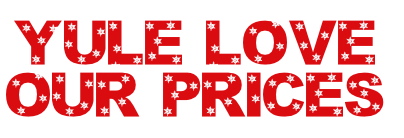
Now come on – do you ever use the word ‘Yule’?  “Going anywhere this Yule?”  “We’re having grandmother for Yule.”  “Did you get any nice Yule presents?”  If you do, well, frankly, yule be  – no, stop it.  But this is an absolute regular.  It comes from having too little time to come up with the headline, and thinking your readers still speak in Norse- and Gothic-tinged Old English.

A year in advertising

Christmas may be prime time for cliches, but other seasons have their hardy advertising perennials too.  Spring wouldn’t be the same without a stressed wordsmith throwing up his hands in despair and settling for an Easter EggstravaganzaSummer Sizzlers show up whenever a retailer has special offers on barbecue items, but any bargains in June, July or August can be legitimately described this way.

There’s that awkward period around May when nobody knows quite where we are.  That’s when Spring into Summer comes into its own.   As for bank holidays, we’re short-changed in comparison with the rest of Europe so perhaps a little euphoria is understandable when they arrive.  Cue the burst of Bank Holiday Bonanzas in DIY superstore advertising whenever there’s an official Friday or Monday off.

But my favourite in season-themed advertising standbys is what must be the ultimate in all-purpose headlines.  It fits any time of year, it fits any taste, it fits any motivation. The delight in welcoming this classic isn’t limited to a short period when it’s topical.  You’ll catch sight of it anywhere, any time – and whoever you are, whatever your inclinations, it claims to speak to you.

It is, of course:

Don’t you feel that familiar gleam of recognition?  And are you so consumed by the novelty of the approach that you can’t resist reading on?  OK, no.

There must be a way out

Now then – you may be looking ahead to your own Christmas advertising right now, and maybe you’d prefer to avoid the pitfalls listed here.  Well, there is a very practical option.  That’s right – give me a call.   Whatever your message, it is possible to state it without sending your readers or viewers to sleep.  I’m in the right frame of mind already since I’m working on a few Christmas jobs right now, and I promise you there isn’t a ‘Winter warmers’ headline in sight.

Have a Merry September.

Goodbye Bill, Hello Will


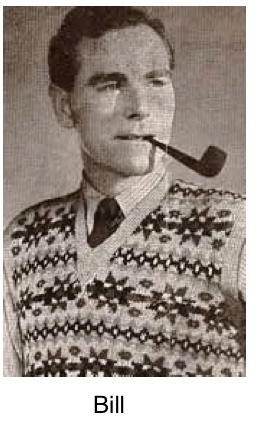
If you’ve been called Bill for twenty or thirty years or so, can you re-market yourself successfully as a Will?

First names are a minefield for the trend-conscious.  I don’t mean the names that footballers and popular beat combo performers bestow on their offspring. The Beckhams’ latest creation, Harper Seven, sounds vaguely like a car – maybe they asked Austin Healey’s advice – but that’s the stuff of a serious study of its own.

I’m wondering, instead, about the names that we might think of as normal, but which surface and re-surface in new guises depending on current taste.  So back to Bill.

The fact is, you simply don’t find many young Bills about the place.  Yes, there are plenty of Williams around, but something has happened with the way they develop their identity.

There was a time when a William would naturally become a Bill once he started thinking of himself as a grown-up, i.e. at about fourteen.  Now, however, once a William sprouts to about five-foot-five he doesn’t become a Bill.  He becomes a Will.

Then there’s Bob.  Hardly to be found among that species known as The Young.  The Roberts are there, but once they feel the need for an image they follow the equivalent of the William process.  So a Robert doesn’t become a Bob. He becomes a Rob.

It’s not so much that they’ve changed their name.  What they’ve done is changed the way they change their name. It’s hardly surprising that a Richard would rather become a Rick than a Dick, but consider James.   He wouldn’t consider morphing into Jim, as his father would have done.  He’ll now emerge from his chrysalis as Jamie or, perversely, stick to the full James.  Either way, Jim bites the dust as an option.

So back, once more, to Bill.  Let’s say he’s in his forties.  He feels pretty youthful, and he’d like to be thought of as a modern kind of fellow.  But everyone knows him as Bill. Could he re-brand himself as Will?

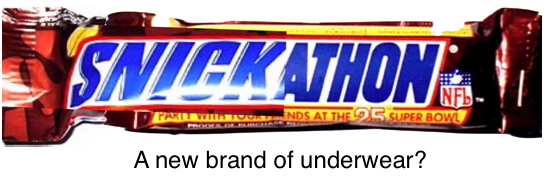
Manufacturers usually re-brand for reasons of multinational consistency.  It might seem sensible from a corporate point of view but consumers usually resist the idea because it challenges the way they think about a product.  Given the choice, they’d prefer not to – it’s too much effort.  How could a Marathon possibly be a Snicker?  Is an Opal Fruit truly a Starburst?  Foreigners might find Jif unpronounceable, but Cif just looks wrong in a Wigan Tesco.

Yet, dammit, it seems to work over time.  So Olay’s OK these days, though Oil of Ulay did put up a fight in the public consciousness.   Accenture is now a consulting giant and seems to have escaped the obloquy attached to the name Arthur Andersen.  Snickers and Starbursts now seem to sit on the shelves quite comfortably.

But it’s never easy to come up with a hard and fast answer to the product name conundrum.

Remember Royal Mail’s attempt to reinvent itself as thrusting, forward-looking, super-efficient Consignia?  Nobody was fooled, and it was soon back to the name and service we all love.

Standing still can be risky, too.  French drink brand Pschitt could certainly do with a rethink if it launched Britain.  And you don’t see Omo around much any more, do you?

So Bobs, Bills and Jims – you might stand a chance of successful rebranding, but it could take a while. And there’s the drawback: by the time you’ve re-established yourselves there’ll probably be another twist on what’s hot in first names.  For a quick fix you’ll just have to move to a different town and start again with no Bobness, Billness or Jimness to battle against.

Never read a book review

Never read a book review.  Or a film or theatre review, either.  And if you happen on a reviewer in action on the radio, switch off quick.

Why? Because a reviewer is like a nasty uncle who dangles a scrumptious sweet in front of a drooling toddler, then pops it into his own mouth and eats it himself, slowly and indulgently, while the kid groans in despair.

For some reason, even the most eminent reviewers now act like third-formers handing in an English essay with the sole intention of demonstrating they’ve read the book.

I love a good book.  I appreciate somebody giving me a recommendation. What I don’t want is somebody telling me so much about the book that I don’t really need to read it.  Because let’s face it, no matter how important character development is, it doesn’t exist in a vacuum.  It’s shaped by the events of the story.  “What happens next?” is the irresistible question in all good reads, not just whodunnits.   So why would I want to know all that before I turn the first page?

Take a look at this sample review from a national newspaper.  I’ve altered the facts and events described in order to hide the identity of the book (you might want to read it yourself) but everything else is verbatim.

Murder in Gloucestershire and massacre in the Middle East come together traumatically in X’s new novel.  Currently the proprietor of a newsagent’s shop on the Isle of Man, Bob Simms – tall, narrowly-built, 42 years old – grew up and spent most of his life at Newley Stables in the Cotswolds.  Owned by his family for generations, it was devastated by equine disease.  Watching his beloved horses culled, Bob’s widower father faced ruin.  Desertion by his younger son Mike, who ran away to join a terrorist group as a teenager, added to the pressures that resulted in his death.   

Along with an unexpected legacy, the sale of the stables to a property developer freed Bob to marry his long-time girlfriend Josie, also from a horse-breeding background.  Together, they left the mainland for the Isle of Man where, in contrast to his deep-rooted way of life, Bob now runs his newsagent’s.

Then, in Spring 2005, a letter from the Foreign Office breaks the news that Mike has been killed in arab territory.  His death, reopening old psychic wounds, rips Bob and Josie apart.  For, scared of being pulled back into a world they have left behind them, she refuses to accompany Bob on his journey to the mainland to receive his brother’s body, then back to Gloucestershire to bury it amid the Simms graves ….

And so on, and on, and on.  The reviewer outlines the plot, describes the characters, supplies their background, dissects their motivations and then tells the story.  I want the book itself to do all those things.  By telling me everything this reviewer has denied me the pleasure of reading the book, and cost the author a sale.

What he’s done, in effect, is describe the features rather than the benefits.  I don’t want to know the who, what and why – I want to know whether they add up to something I’d feel like buying.

People who have a product or service to sell often make the same mistake.  They’re so close to their much-loved creation that they think everyone else will feel the same way once they know what’s gone into it.

Unfortunately, consumers don’t share that unconditional love.  They’re interested in one thing: “What’s in it for me?”  Instead of the nuts and bolts and special glue that go into the make-up, they’re interested in how the product will actually improve their lives.

It can be a hard lesson.  According to Ralph Waldo Emerson: “Build a better mousetrap and the world will beat a path to your door.”  Well, it may have been like that in 19th-century New England but things are different now, Ralph.

Because first you need to tell people about your mousetrap.   And if you spend too much time talking about the steel-wound spring and the galvanised bolts, and not enough on the joy of no more noise behind the skirting board at night, your only customers will be the relative few with a special interest in sprung death traps.

As for the book, find it in a bookshop, turn to page 69 and read that page.  If it seems OK, buy it.  That’s honestly the only way – unless you can find a reviewer who knows the difference between a galvanised bolt and a good night’s sleep.

Who’s claiming to be me in the census?

I filled in my census form like a good citizen – or, actually, like a citizen trying to avoid a £1,000 fine – and gave a false description of myself.

Not intentionally, you understand – phew, another fine avoided – but because of the way some of the questions were phrased.  The Office of National Statistics delivers its figures to help government in ‘the planning and allocation of resources, policy-making and decision-making’.  Well, they’ll be going down the wrong street if they’re doing any planning, allocating and deciding aimed at me.

Home sweet home?

They might want to know what sort of a house I live in, for instance.  The only description I could find that fitted was ‘terraced’.   That wasn’t quite how the developers described it when they spotted I was clutching a mortgage offer.  Now it’s hardly a stately home but it’s not a Victorian workers’ cottage either.  And, anyway, I’ve seen plenty of those which   demand rather more than the word ‘terraced’ to describe them in their updated splendour.  Just what is the term going to convey to those resource-allocators and decision-makers? 

Is this really me?

Then there’s the car parked outside and duly counted.  It belongs to the household all right, but I personally could no more drive it than walk around the exterior of my terraced abode.  Never had a licence in my life, yet I’ll now be tagged as a motorist by the statisticians.  Maybe I’ll be allocated some ‘resources’ on that basis.

Definitely not

Religion?  Well, the ONS offered me quite a few but as none of them really took my fancy I ticked the ‘No Religion’ box.  So at least I’m not a Satanist.

But it’s a bit more complicated than that.    Like most people, I’d guess, I’m not so much godless as a chap just hedging his bets.  Even ‘agnostic’ is a bit too definite for me. Yet once again I’m in the database as someone I don’t really recognise.

I know the boffins who crunch the numbers were keen to keep the questions as simple as possible.  But if I were using the research for the sordid purposes of advertising, where we like a clear sight of our target audience, I wonder how campaignable some to the stats would be.

Hang on – the post’s just arrived.

Hmm.  An invitation to drive in the European Rally Championship.   An offer to convert my outside toilet into a scullery extension.   A discount on string-backed driving gloves.  A sale of wrought iron boot scrapers.  Five anonymous prayers for my salvation.

My resources have already been allocated.

What’s that supposed to mean?

When did railway stations become train stations?  When did ‘free’ become ‘for free’?

Why have people started answering the question “How are you?” with “Yeah”?

When did “I said” become “I’m like”?

What is it about football summarisers and the present perfect tense (“He’s turned inside and he’s got into the box then he’s gone down and the ref’s not given it” instead of “He turned inside, he got into the box, etc.”)?

"Just like that!"

Funny business, language change.  It’s supposed to be caused by a more powerful culture from elsewhere.  That’ll be the US, of course – although Australia is blamed for Upspeak, whose users say everything as if it’s a question.  Not sure about the more powerful culture bit there.

Wherever a new usage comes from it seems to be a bottom-up rather than a top-down process.  It’s insidious rather than imposed.  It sneaks in and spreads its influence until, before you know it, everybody’s saying it.

“Boom, boom!”

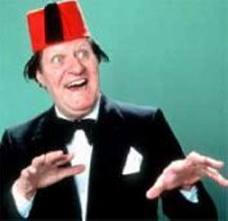
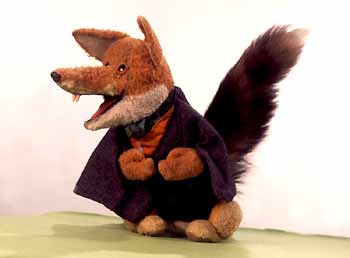
So does that mean you can’t deliberately influence the way people speak?  Well, what about this lot: “Just like that!”, “Lovely Jubbly”, “Am I bovvered?”, “Boom boom!”?  Yes, the comic’s catchphrase.

Every comedian would love to be immortalised that way.  They want their trademark phrases to catch on in order to boost their reputations – and occasionally it happens.

But can it happen in a commercial sense?

Aeons ago I worked at an advertising agency which was in the process of inventing the strapline ‘Asda Price’.  The phrase was accompanied by a hand tapping a bottom.  This was meant to draw attention to the money saved, safe in the back pocket.  How many people actually carried their money in their back pockets wasn’t an issue.  We were more interested in the power of the close-up of the jeans-clad bottom (and yes, it was always the female version).

Imagine the shock, after a while, to see real, normal, human beings showing their appreciation of a bargain of any sort by tapping their bottoms and mouthing “Asda Price”, usually accompanied by a wink.  They might have been talking about buying a bike, a second-hand car or a Rembrandt, but the story would be illustrated by the bottom-pat, the wink and the magic words.

In 1992 Saatchi & Saatchi produced a knocking poster for the Tories warning of Labour’s ‘Double Whammy’ – higher taxes and higher prices.  It seemed an alien phrase.  Had anybody in Britain ever used it?  Was it part of the national vocabulary? In fact it was a misuse of an American expression, something to do with giving the evil eye in double measure.   Saatchi’s poster ignored that and went for something more childishly basic: two big boxing gloves with the words printed on them.  Not very promising, I thought.  Yet today anybody talking about being hit in quick succession by two misfortunes will trot out the words “double whammy” as if they’d been rubber-stamped by Shakespeare.

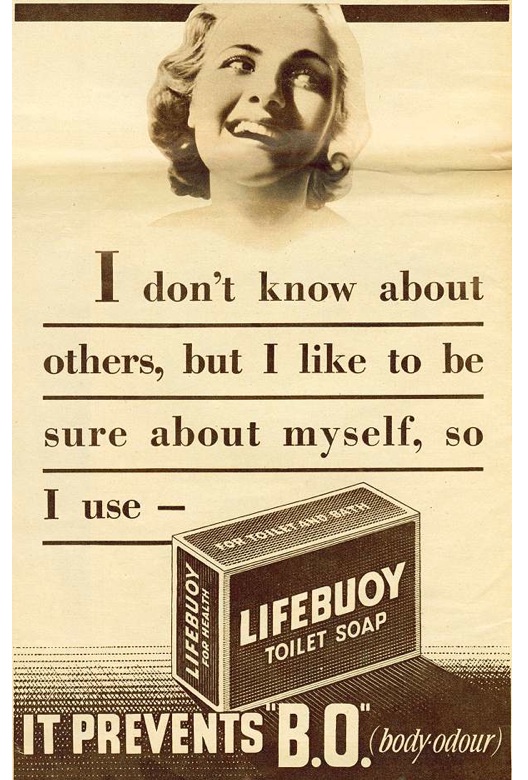
Now, if you don’t wash you’ll pong a bit.  And it will have been pretty noticeable in the days before our shower-deodorant-clean-clothes-every-day lifestyle.  But how could you refer to that condition in polite society?

The makers of Lifebuoy soap came up with the answer.  They invented B.O.  The vaguely scientific abbreviation for Body Odour was delivered in a dramatic whisper to the hapless non-Lifebuoy user.  Before long, kids everywhere would be stage-whispering the damning indictment to anyone they wanted to pick on.  It lasted for years as a killer put-down, maybe still does.

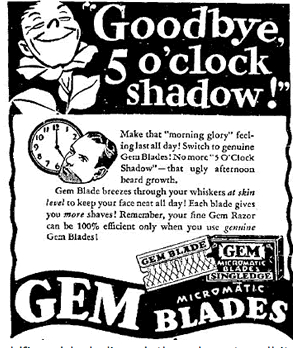
At some point in the late afternoon any chap’s cheeks and chin will start getting a bit bristly.  After all, it’ll be about ten hours since he had a shave.  Nothing to get neurotic about, you’d think.  But then came the dread concept of ‘Five O’clock Shadow’.  Aaaarrrghh! Social disaster.  Only one way to head it off – use the right razor blade in the morning.  The Gem Micromatic Blades company introduced the phrase in a 1930s advertising campaign.  Result?  Fear of something you never even knew existed, and an addition to the language which now seems as if it’s always been there.

So it can be done.  It is possible to introduce something which identifies your brand into public consciousness through everyday language.   The difference now is that, with so many more communication channels and viral possibilities, a multi-million pound budget isn’t essential.  Maybe, with a clever bit of wordplay and manipulation, your message could be on everyone’s lips.  Why?  Because you’re worth it.